


Using the Theme Centered Interaction (TCI) as compass to navigate change
Organizational Development (OD) is a proactive, systemic approach to embracing change—both internal and external—and leveraging it for renewal and growth. Its goal: to help organizations adapt and thrive in a VUCA world by staying responsive to shifts in markets, technologies, and customer needs.
“Business—and every other organization today—has to be designed for change as the norm and to create change rather than react to it.”
– Peter Drucker
OD drives change at every level, from systems and structures to the values, attitudes, and mindsets of individuals. Successful transformation means aligning external shifts with internal dynamics like team development, communication, and innovation.
To navigate this complexity, the Theme-Centered Interaction (TCI) model, developed by Ruth Cohn, offers a powerful framework. TCI helps identify the forces shaping an organization and guides how to balance them for sustainable, healthy growth.
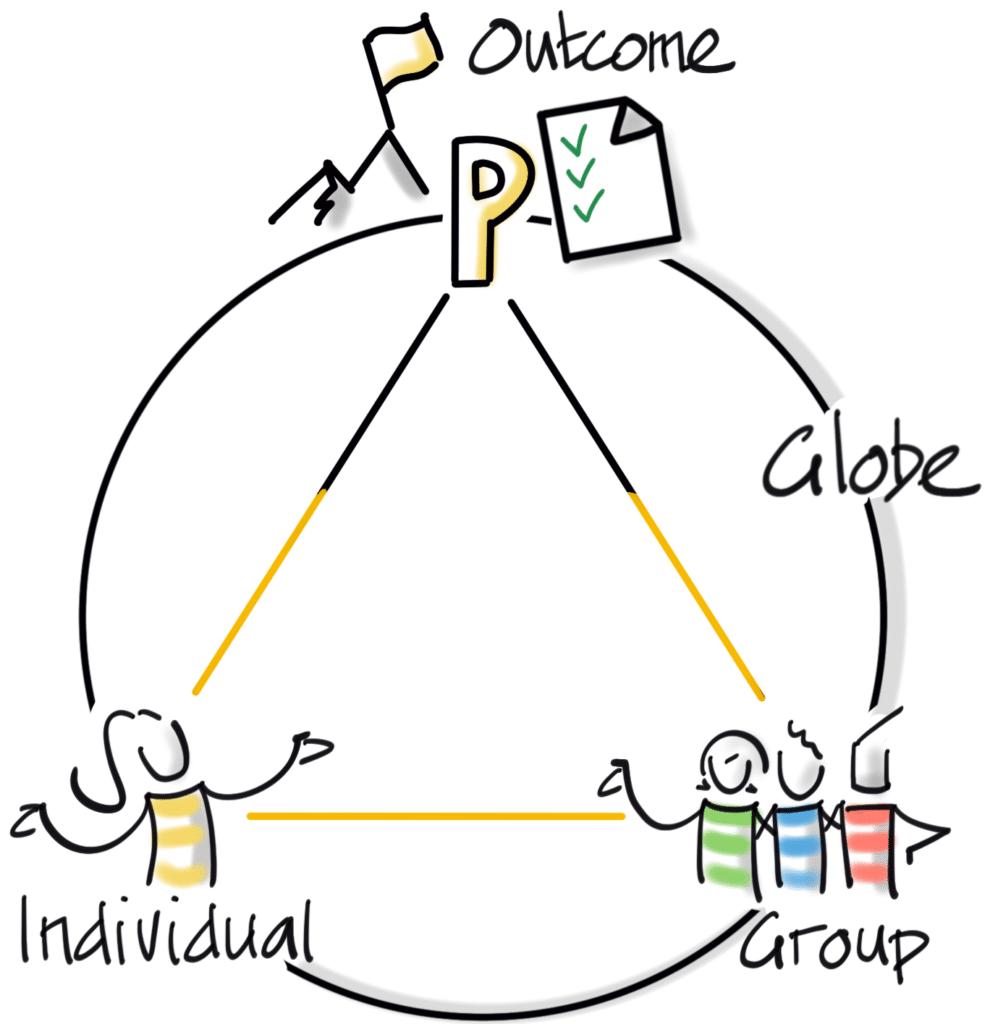
At the heart of TCI lies a triangle:
- I – the individual
- We – the group
- It – the task, goal, or project
The triangle is encircled by a globe—the external environment. As the environment changes, the balance between the three points must shift too. The triangle reminds us that no single element can dominate; maintaining equilibrium is key to staying adaptive and effective.
TCI also offers two core principles for managing the human side of change:
- “Be your own chairperson” – Listen inwardly, take responsibility for your needs and actions.
- “Disturbances take precedence” – Listen outwardly, address tensions and blocks before they derail the process.
These principles keep the human dynamic aligned with organizational goals and support constructive transformation.
→ TCI is a reliable compass for OD. It helps map the external context and guide internal transitions—ensuring balance, clarity, and sustainable change.
* Peter F. Drucker (1909–2005) – Pioneer of modern management.
* Ruth C. Cohn (1912–2010) – Psychotherapist and educator, creator of Theme-Centered Interaction (TCI).
